Exclusive | U.S. Plans to Use Tariff Negotiations to Isolate China
The Trump administration plans to use ongoing tariff negotiations to pressure U.S. trading partners to limit their dealings with China, according to people with knowledge of the conversations.
根据知情人士的说法,特朗普政府计划利用正在进行的关税谈判来施压美国贸易伙伴,限制他们与中国的交易。
The idea is to extract commitments from U.S. trading partners to isolate China’s economy in exchange for reductions in trade and tariff barriers imposed by the White House. U.S. officials plan to use negotiations with more than 70 nations to ask them to disallow China to ship goods through their countries, prevent Chinese firms from locating in their territories to avoid U.S. tariffs, and not absorb China’s cheap industrial goods into their economies.
这个想法是从美国的贸易伙伴那里提取承诺,以孤立中国经济,作为减少白宫施加的贸易和关税壁垒的交换。美国官员计划与 70 多个国家进行谈判,要求他们不允许中国通过其国家运输货物,防止中国企业在其领土上落户以避免美国关税,并且不将中国的廉价工业商品吸收到他们的经济中。
Those measures are meant to put a dent in China’s already rickety economy and force Beijing to the negotiating table with less leverage ahead of potential talks between Trump and Chinese President Xi Jinping. The exact demands could vary widely by nation, given their degree of involvement with the Chinese economy.
这些措施旨在削弱中国已经摇摇欲坠的经济,并迫使北京在潜在的特朗普与中国国家主席习近平的谈判之前,处于较弱的谈判地位。具体的要求可能因各国与中国经济的参与程度而有很大差异。
The White House and Treasury didn’t respond to requests for comment.
白宫和财政部没有回应评论请求。
U.S. officials have broached the idea in early talks with some countries, people familiar with the discussions said. Trump himself hinted at the strategy on Tuesday, telling the Spanish-language program “Fox Noticias” he would consider making countries choose between the U.S. and China in response to a question about Panama deciding not to renew its role in the Belt and Road Initiative, China’s global infrastructure program for developing nations.
美国官员在与一些国家的初步谈判中提出了这一想法,知情人士表示。特朗普本人在周二的西班牙语节目“福克斯新闻”中暗示了这一策略,告诉节目组他会考虑让各国在美国和中国之间做出选择,以回应关于巴拿马决定不续签“一带一路”倡议的提问,这是中国为发展中国家提供的全球基础设施项目。
One brain behind the strategy is Treasury Secretary Scott Bessent, who has taken a leading role in the trade negotiations since Trump announced a 90-day pause on reciprocal tariffs for most nations—but not China—on April 9.
这一策略背后的主要智囊之一是财政部长斯科特·贝森特,自特朗普于 4 月 9 日宣布对大多数国家(但不包括中国)暂停 90 天的互惠关税以来,他在贸易谈判中发挥了主导作用。
Bessent pitched the idea to Trump during an April 6 meeting at Mar-a-Lago, the president’s club in Florida, said people familiar with the discussion, saying that extracting concessions from U.S. trading partners could prevent Beijing and its companies from avoiding U.S. tariffs, export controls and other economic measures, the people said.
据熟悉讨论的人士透露,贝森特在 4 月 6 日于佛罗里达州的马阿拉歌总统俱乐部与特朗普会面时提出了这一想法,认为从美国贸易伙伴那里获取让步可以防止北京及其公司规避美国的关税、出口管制和其他经济措施。
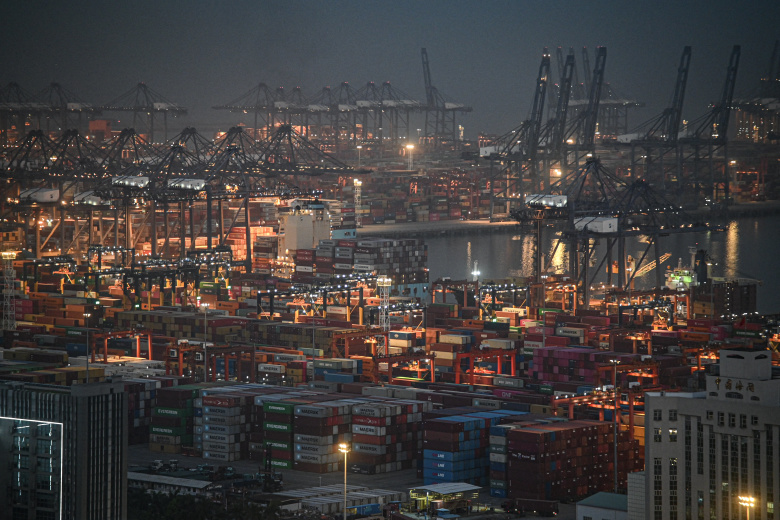
Night view of a busy shipping port in China with numerous containers and cranes.
Shipping containers at a port in southern China.Photo: jade gao/Agence France-Presse/Getty Images
中国南部一个港口的货运集装箱。照片:jade gao/法新社/盖蒂图片社
The tactic is part of a strategy being pushed by Bessent to isolate the Chinese economy that has gained traction among Trump officials recently. Debates over the scope and severity of U.S. tariffs are ongoing, but officials largely appear to agree with Bessent’s China plan.
这一策略是贝森特推动的,旨在孤立中国经济,最近在特朗普官员中获得了支持。关于美国关税的范围和严厉程度的辩论仍在进行中,但官员们在很大程度上似乎同意贝森特的中国计划。
It involves cutting China off from the U.S. economy with tariffs and potentially even cutting Chinese stocks out of U.S. exchanges. Bessent didn’t rule out the administration trying to delist Chinese stocks in a recent interview with Fox Business.
该计划涉及通过关税切断中国与美国经济的联系,甚至可能将中国股票剔除出美国交易所。贝森特在最近接受福克斯商业频道采访时并未排除政府尝试将中国股票退市的可能性。
Still, the ultimate goal of the administration’s China policy isn’t yet clear.
然而,政府对中国政策的最终目标尚不明确。
Bessent has also said there is still room for talks on a potential trade deal between the U.S. and China. Such talks would have to involve Trump and Xi. White House press secretary Karoline Leavitt read a new statement from Trump during Tuesday’s press briefing suggesting a deal with China isn’t imminent.
贝森特还表示,美国和中国之间的潜在贸易协议仍有谈判空间。这些谈判必须涉及特朗普和习近平。白宫新闻秘书卡罗琳·利维特在周二的新闻发布会上阅读了特朗普的新声明,暗示与中国的协议并不迫在眉睫。
“The ball is in China’s court,” Leavitt said when reading Trump’s statement. “China needs to make a deal with us. We don’t have to make a deal with them. China wants what we have…the American consumer.”
“现在轮到中国了,”利维特在阅读特朗普的声明时说。“中国需要与我们达成协议。我们不必与他们达成协议。中国想要的是我们所拥有的……美国消费者。”
It also isn’t clear that the anti-China line has entered into negotiations with all nations. Some countries haven’t heard demands from U.S. negotiators related to China, say people familiar with the talks, though they acknowledge that negotiations remain in early stages. Many expect the Trump administration to raise China-related demands sooner or later.
目前尚不清楚反华立场是否已与所有国家进行谈判。一些国家表示尚未听到美国谈判代表与中国相关的要求,尽管他们承认谈判仍处于早期阶段。许多人预计特朗普政府迟早会提出与中国相关的要求。
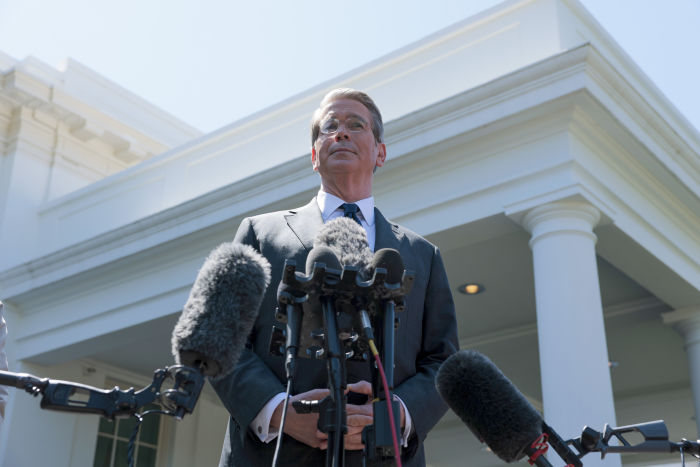
Treasury Secretary Scott Bessent addressing reporters at the White House.
Treasury Secretary Scott Bessent has laid out a list of nations he thinks could soon reach deals with the U.S.Photo: Anna Moneymaker/Getty Images
财政部长斯科特·贝森特列出了他认为可能很快与美国达成协议的国家名单。照片:安娜·莫尼梅克/盖蒂图片社
Bessent has shown his desire for anti-China pledges from U.S. trading partners before. In late February, he said that Mexico had offered to match U.S. tariffs on China as part of negotiations over Trump’s tariffs on Mexico imposed because of the fentanyl trade. Bessent called Mexico’s offer a “nice gesture,” but the idea didn’t find much traction with the administration.
贝森特之前曾表达过对美国贸易伙伴提供反中国承诺的渴望。在 2 月底,他表示墨西哥已提出愿意与美国对中国的关税相匹配,作为与特朗普因芬太尼贸易而对墨西哥实施的关税谈判的一部分。贝森特称墨西哥的提议是一个“不错的姿态”,但这一想法在政府中并没有得到太多支持。
Since then, Bessent has taken a more central role in trade negotiations, assuming a lead in talks over reciprocal tariffs after Trump announced his 90-day pause on April 9. The Treasury secretary is slated to meet with Japan’s economic revitalization minister as soon as Wednesday and has laid out a list of nations he thinks could soon reach deals with the U.S., including Japan, the U.K., Australia, South Korea and India.
从那时起,贝森特在贸易谈判中扮演了更为核心的角色,在特朗普于 4 月 9 日宣布暂停 90 天后,主导了关于互惠关税的谈判。财政部长计划在周三尽快与日本经济复兴大臣会面,并列出了他认为可能很快与美国达成协议的国家名单,包括日本、英国、澳大利亚、韩国和印度。
China is conducting its own trade diplomacy. This week, Xi traveled to Vietnam—a major U.S. trading partner hard-hit by Trump’s tariffs —and signed dozens of economic pledges with the Hanoi government.
中国正在进行自己的贸易外交。本周,习近平访问越南——一个受到特朗普关税重创的重要美国贸易伙伴——并与河内政府签署了数十项经济承诺。
China views Trump’s reciprocal trade gambit as an opportunity, Peter Harrell, the former senior director for international economics on former President National Security Council, said on a panel discussion Tuesday at Georgetown Law.
中国将特朗普的互惠贸易策略视为一个机会,前总统乔·拜登国家安全委员会国际经济事务高级主任彼得·哈雷尔在乔治城法学院的一个小组讨论中表示。
But China’s ability to counteract U.S. trade policies is limited, Harrell said. While the U.S. remains a “massive net importer,” China is reducing its imports from the rest of the world and focusing on self-sufficiency.
但哈雷尔表示,中国反制美国贸易政策的能力有限。尽管美国仍然是一个“巨大的净进口国”,中国正在减少从世界其他地区的进口,专注于自给自足。
China “isn’t going to replace the U.S. as a source of demand for the products that a bunch of these developing countries…make,” Harrell said. “So the economics of this are going to prove challenging for China, but I think we see them playing the politics of this reasonably savvily.”
哈雷尔说:“中国不会取代美国,成为这些发展中国家生产的产品的需求来源……因此,这对中国的经济来说将是一个挑战,但我认为我们看到他们在这方面的政治操作相当聪明。”
Write to Gavin Bade at gavin.bade@wsj.com and Brian Schwartz at brian.schwartz@wsj.com
写信给 Gavin Bade,邮箱是 gavin.bade@wsj.com,以及 Brian Schwartz,邮箱是 brian.schwartz@wsj.com
Copyright ©2025 Dow Jones & Company, Inc. All Rights Reserved. 87990cbe856818d5eddac44c7b1cdeb8
Appeared in the April 16, 2025, print edition as ‘U.S. to Use Tariff Talks to Isolate Beijing’.
出现在 2025 年 4 月 16 日的印刷版中,标题为“美国将利用关税谈判孤立北京”。